

Roulette has always attracted players with its clean simplicity: pick a number, choose a color, place a chip, and watch the wheel decide. Yet anyone who spends real time at the table soon learns that instinct alone is rarely enough. An Effective roulette cheat sheet is less about chasing impossible certainty and more about making calm, informed decisions under pressure. When used properly, it helps you understand the structure of the game, control risk, and avoid the most common mistakes that turn a pleasant session into an expensive one.
What an Effective roulette cheat sheet should actually do
The word “cheat sheet” can be misleading. In roulette, there is no legal shortcut that eliminates the house edge or guarantees a profit. A useful guide does something far more practical: it gives you a compact framework for smarter play. That includes knowing which bets carry the best odds, how to pace your bankroll, and when to step back instead of chasing losses.
The strongest cheat sheets focus on decision support. Instead of overwhelming you with theory, they simplify what matters most in live play or online sessions:
- Bet selection: understanding the trade-off between payout size and hit frequency.
- Table choice: recognizing why European roulette is generally preferable to American roulette.
- Session discipline: setting limits before the first spin.
- Pattern awareness: not to predict outcomes, but to avoid emotional overreaction to short-term streaks.
If you are looking for a compact reference to keep those essentials in view, Effective roulette cheat sheet is a natural place to start, especially for players who want a straightforward guide rather than complicated theory.
The first rule of winning more often: choose the right version of roulette
Before discussing strategies, it is important to understand that not all roulette tables are equally favorable. The difference between European and American roulette is small in appearance but significant in practice. European roulette has a single zero, while American roulette has both a single zero and a double zero. That extra pocket increases the house edge and makes every bet slightly less favorable over time.
For most players, the smartest default is simple: choose European roulette whenever possible. This one decision improves your long-term position without changing the feel of the game. If a table also offers rules such as La Partage or En Prison on even-money bets, the value improves further, especially for players who prefer red/black, odd/even, or high/low betting.
| Roulette Type | Zero Pockets | Best For | General Value |
|---|---|---|---|
| European Roulette | 1 | Most players | Better baseline odds |
| French Roulette | 1 | Even-money bettors | Potentially strongest value when special rules apply |
| American Roulette | 2 | Convenience only | Less favorable because of the extra pocket |
That may sound like a minor technical point, but it is one of the few choices you control before the first chip is placed. An effective player always starts there.
How to read the table: inside bets, outside bets, and balanced risk
Most roulette decisions come down to one question: do you want a better chance of winning this spin, or are you chasing a bigger payout? Inside bets cover specific numbers or small groups of numbers, so they pay more but hit less often. Outside bets cover broader categories, so they pay less but land more regularly.
A practical Effective roulette cheat sheet should help you match your betting style to your actual goal, not your mood in the moment.
Outside bets for steadier sessions
Outside bets are often the most sensible place to begin, especially for newer players or anyone trying to extend playing time. Common options include:
- Red or black
- Odd or even
- Low (1 to 18) or high (19 to 36)
- Dozens and columns
These bets will not produce dramatic wins, but they can reduce volatility and help you stay composed. For players who value control, even-money bets and dozens are often more useful than long-shot number betting.
Inside bets for selective aggression
Inside bets, such as straight-up numbers, splits, streets, and corners, are more volatile. They can be effective in a limited role, especially when you want to take a small, calculated shot without overcommitting your bankroll. The key is proportion. A disciplined player might use outside bets as the session foundation and reserve a small part of each round for selective inside coverage.
What matters is avoiding the common trap of betting big on low-probability outcomes simply because a previous spin felt “close.” Roulette does not remember what almost happened.
Bankroll management is the real cheat sheet most players need
If there is one area where players lose control fastest, it is bankroll discipline. A session can go wrong not because of a bad strategy, but because the player sizes bets emotionally. Smart roulette play is often less glamorous than people hope: it is about limits, pacing, and restraint.
Use these core bankroll rules as a working checklist:
- Set a session budget before you begin. Only play with money allocated for entertainment, never money needed elsewhere.
- Break your bankroll into units. Many players benefit from defining one unit as a small percentage of the session total and betting in those units rather than improvising each spin.
- Decide a win-stop and loss-stop point. Knowing when you will leave protects both gains and discipline.
- Avoid recovery betting. Increasing stakes after losses may feel logical in the moment, but it can escalate risk quickly.
- Do not confuse a short streak with a system working. Temporary results are not proof of a permanent edge.
This is where the business focus of Roulette Cheat Sheet | Best Roulette Strategies For Winning Often becomes genuinely useful. The best strategy is rarely the flashiest one. More often, it is the one you can follow consistently without letting frustration or excitement take over.
Which roulette strategies are actually useful?
Roulette strategy discussions often become overly dramatic. In reality, most systems are staking plans, not methods for changing the math of the wheel. That does not make them worthless, but it does mean they should be understood for what they are: tools for structuring bets, not guarantees of profit.
Martingale
The Martingale asks players to double their bet after each loss on even-money wagers. Its appeal is obvious, but so is its risk. A short losing streak can force very large bets quickly, making table limits and bankroll pressure real problems. It is simple, but not gentle.
Reverse Martingale
This approach increases stakes after wins rather than losses. It aims to ride positive momentum while limiting exposure during bad stretches. It can be more psychologically sustainable than chasing losses, though it still depends heavily on disciplined exit points.
D’Alembert
This progression increases the stake by one unit after a loss and decreases by one unit after a win. It is slower and less aggressive than Martingale, which some players find easier to manage over a longer session.
Flat betting
Flat betting means staking the same amount each round. It may sound dull compared with famous systems, but it is one of the clearest ways to protect bankroll stability and reduce emotional decision-making. For many players, it is the most practical approach of all.
A sensible cheat sheet does not tell you that one system will beat roulette. It helps you choose the structure that best matches your risk tolerance, session length, and discipline level.
A simple session plan for smarter roulette play
One of the easiest ways to improve roulette decision-making is to enter each session with a routine. The more you decide in advance, the less likely you are to improvise badly.
- Choose European or French roulette first.
- Set a clear bankroll and unit size.
- Prefer outside bets if your goal is longer play.
- Use inside bets sparingly and intentionally.
- Pick one staking method and stick to it.
- Leave when your stop point is reached.
That kind of structure will never make roulette risk-free, but it can make your play sharper, calmer, and more consistent. In a game driven by chance, consistency in your own behavior is one of the few real advantages available.
In the end, an Effective roulette cheat sheet is not about fantasy promises. It is about clarity. It helps you recognize better tables, choose more sensible bets, manage your money with discipline, and understand the limits of every strategy. If your goal is to win more often in a practical sense, not chase guarantees that do not exist, that approach is far more valuable than superstition. Play with a plan, respect the math, and let good habits do the work that emotion never can.
——————-
Article posted by: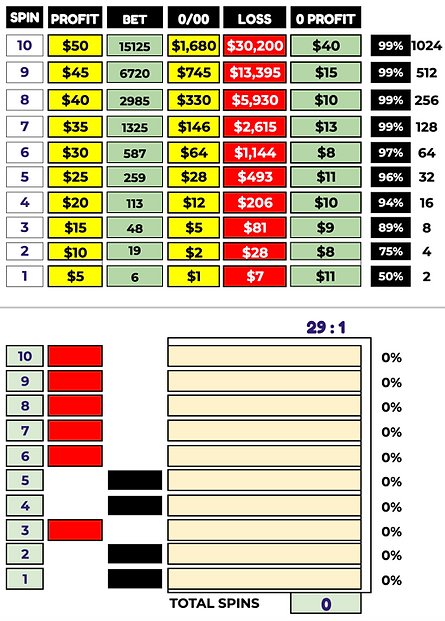
HOME | RouletteCheatSheet
https://www.roulettecheatsheet.com/
Croom – Maryland, United States
HOME | RouletteCheatSheet
